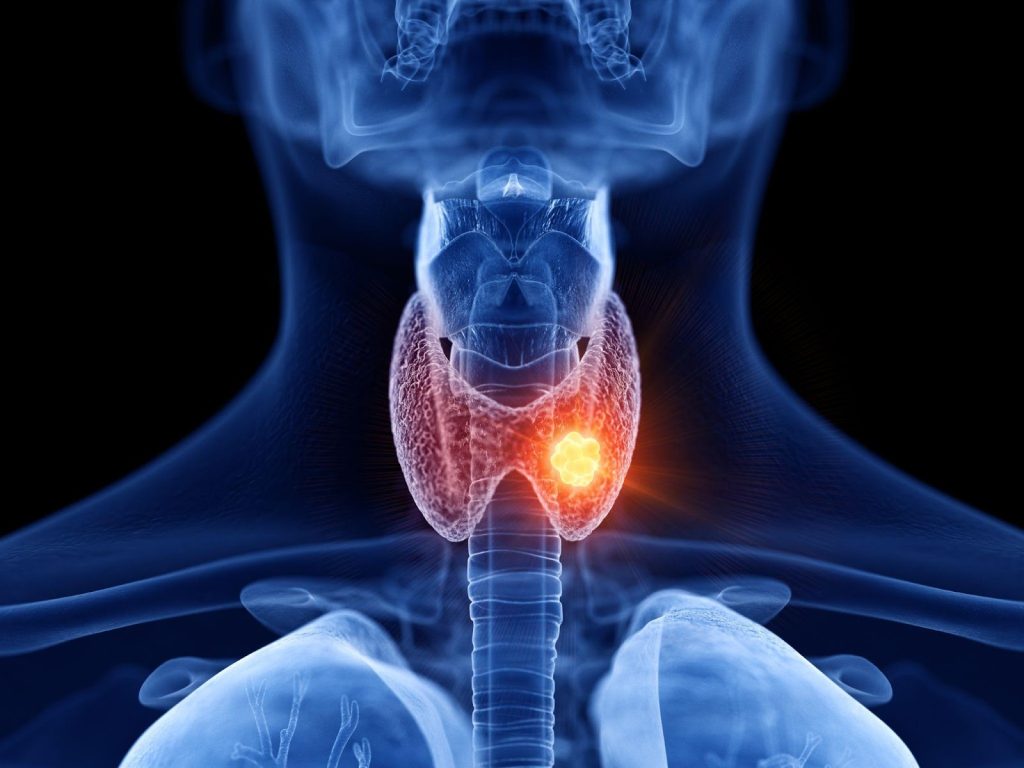
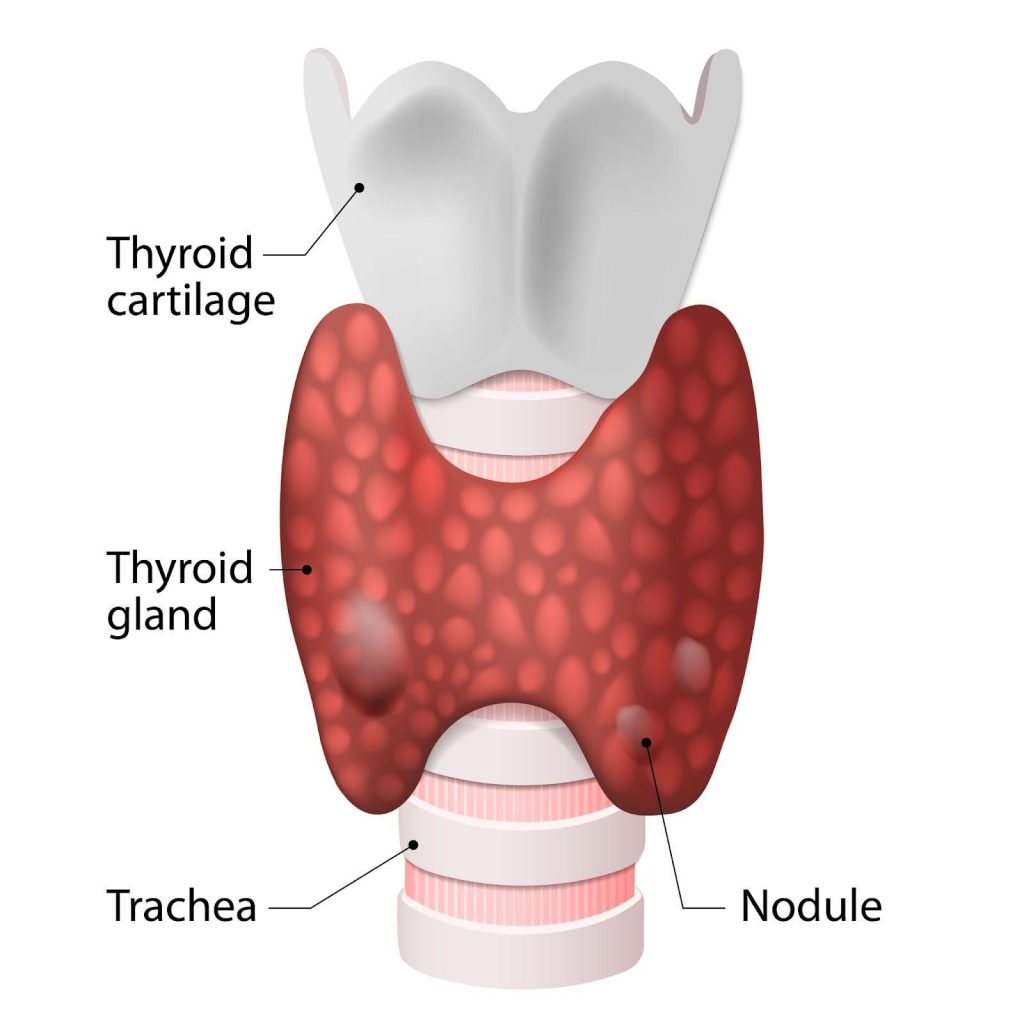
Thyroid nodules are lumps that form within the thyroid gland, which is a butterfly-shaped organ that sits at the front of the neck and produces hormones that regulate metabolism. These nodules are quite common, especially in adults, and are often discovered during routine check-ups or imaging done for unrelated reasons. Many people may not even realise they have them, as most nodules do not cause symptoms.
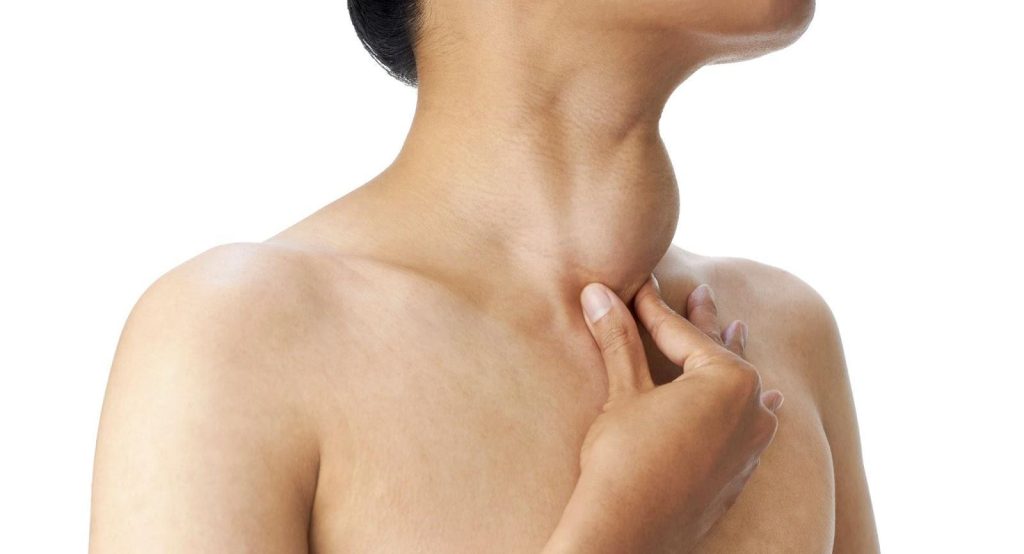
Thyroid nodules can vary in size and structure. Some are very small and go unnoticed, while others can grow large enough to be felt or seen as a swelling in the neck. In certain cases, they may cause symptoms such as a visible lump, discomfort or obstruction when swallowing, or changes in voice. Rarely, a nodule may produce excess thyroid hormone, leading to symptoms of hyperthyroidism like rapid heartbeat or weight loss. But thyroid nodules can also be associated with normal or low thyroid function.
Nodules are classified based on their number and content:
Thorough evaluation by a specialist through physical examination, thyroid function tests, ultrasound imaging, and sometimes fine-needle aspiration (FNA) is essential to determine whether a nodule is harmless or requires further management.
Thyroid nodules can develop for several reasons, most of which are non-cancerous. Understanding the underlying cause helps guide diagnosis and management. Common causes include:
Each case requires careful evaluation to determine whether a nodule is benign or potentially more serious.
In many cases, thyroid nodules do not cause any symptoms and are discovered during a routine physical exam or imaging test done for another reason. However, when symptoms do occur, they may include:
It’s important to remember that the presence of symptoms does not necessarily indicate cancer, and most thyroid nodules are benign. Proper evaluation through ultrasound and thyroid function tests helps determine the underlying cause.
Thyroid nodules are common, and certain individuals are more likely to develop them due to biological, environmental, and lifestyle-related factors. In Singapore, common risk factors include:
Thyroid nodules are often detected during a routine physical exam or incidentally on imaging studies done for unrelated reasons. Once a nodule is suspected, a step-by-step approach is used to determine its nature and whether further treatment is needed.
Common diagnostic steps include:
Each step helps clarify whether the nodule is harmless and can be monitored, or if further treatment or surgery is needed.
Treatment for thyroid nodules depends on several factors, including the size and type of the nodule, whether it’s causing symptoms, and whether it shows signs of cancer or affects thyroid hormone levels. In many cases, no immediate treatment is needed, and monitoring is sufficient.
Common treatment options include:
Each case is assessed individually, and the choice of treatment is made based on nodule characteristics, test results, and patient preference.
Thyroid nodules are common growths within the thyroid gland that may be solid or fluid-filled, single or multiple, and are usually benign. While many nodules are found incidentally and cause no symptoms, others may lead to visible neck swelling, swallowing difficulty, or hormonal imbalances.
Diagnosis typically involves a combination of physical examination, blood tests, ultrasound imaging, and fine-needle aspiration biopsy to determine whether the nodule is harmless or needs further attention. Treatment options range from simple monitoring to medication, radiofrequency ablation, or surgery, depending on the nodule’s size, function, and risk of malignancy.
If you have noticed a lump in your neck, are experiencing related symptoms, or have concerns about thyroid health, schedule a consultation with us for detailed evaluation and personalised care.
While most thyroid nodules are benign, about 4–6% may be malignant. The risk is higher in children under 20, older adults, males, those with radiation history, or suspicious ultrasound/FNA findings.
Benign nodules typically undergo ultrasound and thyroid function tests every 6–12 months. If stable over time, the intervals may be extended, following your doctor’s guidance.
Large benign nodules may cause discomfort, swallowing or breathing difficulty, or a visible neck lump. However, smaller benign nodules usually remain asymptomatic.
Yes, nodules treated with RFA, laser, or surgery can recur, especially if any thyroid tissue remains. Ongoing ultrasound surveillance is important to catch recurrence early.
Familial thyroid nodules or cancer can occur, though most cases are sporadic. A family history of thyroid disease slightly increases your personal risk.
“Hot” nodules are overactive and may cause hyperthyroidism; “cold” nodules are non‑functional and usually hormone‑neutral. Assessment via blood tests and thyroid uptake scan help determine function.

MBBS (Hons), FRACP (Australia)
Dr. Dinesh lulus dengan predikat terpuji dari Monash University, Melbourne, pada 2009, dan menerima penghargaan Prince Henry's Prize in Surgery. Selama pelatihan endokrinologi di Melbourne, Dr. Dinesh memenangkan penghargaan registrar terbaik di Endocrine Society of Australia Clinical Weekend pada 2016, yang kemudian diikuti dengan keberhasilan beliau mendapatkan satu-satunya beasiswa fellowship Andrologi di Australia pada 2017. Sekembalinya ke Singapura, beliau menjabat sebagai pimpinan subspesialisasi untuk layanan adrenal, pituitari, dan tulang di Khoo Teck Puat Hospital serta mendirikan The Metabolic Clinic.
Sebagai pendidik yang berdedikasi, Dr. Dinesh menjabat sebagai Associate Programme Director untuk Endokrinologi di NHG, melatih calon-calon endokrinolog generasi berikutnya, dan menerima penghargaan NHG Teaching Award for Senior Doctors pada 2023. Sebagai seorang endokrinolog dengan kemahiran dalam bidang endokrinologi umum maupun subspesialisasi, beliau memiliki minat dalam bidang longevity (umur panjang) melalui peningkatan risiko kardiovaskular, metabolisme, kesehatan tulang, dan pencegahan penyusutan otot, yang bertujuan meningkatkan jumlah tahun hidup sehat seseorang.


Jika Anda merasa “tidak seperti biasanya” meskipun hasil tes normal, mengalami perubahan berat badan, kelelahan, atau gejala yang tidak dapat dijelaskan—saatnya untuk melihat lebih dalam.
Dapatkan kejelasan dan rencana yang disesuaikan dengan kondisi hormon dan kesehatan metabolik unik Anda.


Senin - Jumat
8:30 am to 5:30 pm
Sabtu
8:30 am – 12:30 pm
Minggu dan Libur Nasional: TUTUP

© 2026 The Metabolic Clinic. All Rights Reserved.