
Cushing’s disease is a hormonal disorder caused by a pituitary tumour that produces excessive amounts of adrenocorticotropic hormone (ACTH). This overproduction of ACTH overstimulates the adrenal glands, leading to persistently high levels of cortisol, an essential-to-life stress hormone that affects metabolism, blood pressure and immune function.
Cushing’s disease is a specific cause of cushing’s syndrome. Cushing’s syndrome refers to an overall state of excess cortisol in the body, which can arise from various causes, including cushing’s disease, medications or adrenal tumours. Cushing’s disease, however, refers specifically to the form caused by an ACTH-secreting pituitary adenoma, a benign tumour located at the base of the brain at the pituitary.
Cortisol plays an essential role in regulating how the body responds to stress, maintains blood sugar and controls inflammation. It is essential to life. Without it, a drop of blood pressure and subsequently death occurs. Conversely when levels remain elevated for a long time, it can lead to a range of symptoms, including weight gain (particularly around the face and trunk), muscle weakness, high blood pressure and changes in mood or skin appearance.
Cushing’s disease is rare and occurs more often in women than in men, typically between the ages of 20 and 50. With accurate diagnosis and effective treatment, cortisol levels can be normalised, allowing recovery of hormonal balance and improved quality of life.
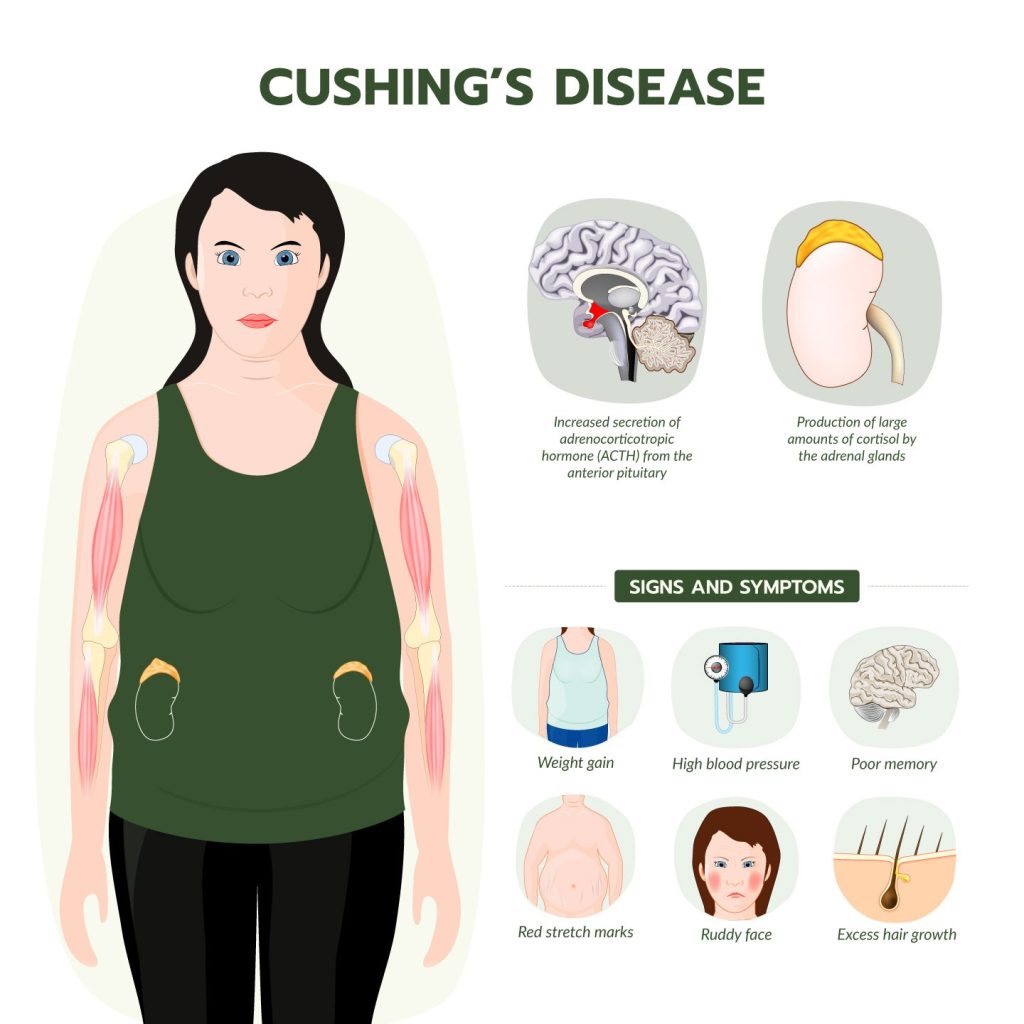
Cushing’s disease develops when a benign (non-cancerous) tumour called a pituitary adenoma forms in the pituitary gland, located at the base of the brain. This tumour produces excessive amounts of adrenocorticotropic hormone (ACTH), which overstimulates the adrenal glands sitting atop the kidneys to release too much cortisol.
Cortisol is vital for maintaining blood pressure, regulating metabolism and managing the body’s response to stress. However, when ACTH secretion becomes uncontrolled, cortisol levels remain chronically elevated, disrupting many body systems.
Understanding the cause is crucial, as treatment aims to remove or suppress the ACTH-producing tumour and restore normal cortisol levels, reducing the risk of long-term complications.
The symptoms of Cushing’s disease develop gradually and may vary depending on how long cortisol levels have been elevated and the severity of hormone excess. Because cortisol affects many systems in the body, symptoms can be wide-ranging and often mistaken for other conditions such as obesity, depression or polycystic ovary syndrome (PCOS).
Over time, untreated Cushing’s disease can lead to serious complications such as osteoporosis, cardiovascular disease and increased susceptibility to infections. Early recognition and proper treatment are essential to reverse hormonal imbalance and prevent long-term health effects.
Cushing’s disease is rare, but certain groups are more likely to develop it based on biological, genetic or medical factors. Recognising these risk factors can help with early detection and timely intervention.
While most people who develop Cushing’s disease do not have an identifiable risk factor, doctors need to be acutely aware of warning signs of possible cushing’s such as unexplained weight gain, rapidly progressive diabetes or high blood pressure, unusual infections and, easy bruising. Early medical assessment can improve outcomes.
Persistent high levels of cortisol can affect nearly every organ system in the body, leading to serious complications if left untreated. These effects develop gradually but can become irreversible without timely diagnosis and management.
Early treatment to normalise cortisol levels can reverse many of these complications and restore long-term health. Ongoing monitoring after therapy helps detect residual effects and prevent recurrence.
Diagnosing Cushing’s disease requires a detailed assessment of symptoms, hormone levels, and imaging studies to confirm the source of excess cortisol. Because many of its features overlap with common conditions such as obesity, diabetes, or depression, a structured diagnostic approach is essential.
Initial tests focus on confirming high cortisol levels and determining whether the excess is ACTH-dependent (pituitary-related). Common investigations include:
Blood tests are performed to measure ACTH levels. Elevated ACTH points to a pituitary or ectopic (non-pituitary) source of cortisol overproduction.
Blood sugar, blood pressure, bone density and cholesterol levels are assessed to identify complications related to prolonged cortisol excess.
Accurate diagnosis is crucial before initiating treatment, as managing Cushing’s disease differs from treating other forms of cortisol excess.
The goal of treatment is to normalise cortisol levels, remove or control the ACTH-secreting pituitary tumour and reverse the effects of prolonged hormone excess. Treatment is tailored to the tumour’s size, location and the patient’s overall health.
When surgery is not possible, unsuccessful or while awaiting its effects, medications can help control cortisol levels. Common options include:
Regular follow-up is crucial, including blood tests to monitor cortisol levels, MRI scans to check for recurrence and assessment of bone, cardiovascular and metabolic health. Early detection of recurrence allows prompt re-treatment and prevents complications.
With timely and effective management, most patients achieve long-term hormonal control and significant improvement in symptoms and quality of life.
With appropriate treatment, most patients with Cushing’s disease can achieve normal or near-normal cortisol levels and experience significant improvement in symptoms. However, recovery may take time, as the body adjusts after prolonged exposure to high cortisol levels.
Cushing’s disease is a rare but serious hormonal disorder caused by an ACTH-producing tumour of the pituitary gland, leading to excessive cortisol production. The resulting hormonal imbalance affects nearly every system in the body, causing weight gain, muscle weakness, high blood pressure, mood changes and other complications that can significantly impact long-term health and quality of life.
Advances in diagnostic testing and imaging allow for accurate identification of the underlying cause, while modern surgical and medical treatments can effectively restore normal cortisol levels and reverse many of the physical and metabolic effects. With proper management, most patients achieve long-term hormonal control, improved energy and a return to normal daily functioning.
If you are experiencing symptoms that may suggest hormonal imbalance or have been diagnosed with elevated cortisol levels, schedule a consultation with The Metabolic Clinic for a comprehensive evaluation and subsequen treatment aimed at reversing the condition and correcting metabolic abnormalities.
Cushing’s disease is rare, affecting about 10 to 15 people per million each year. It is more common in women aged between 20 and 50.
Common symptoms include weight gain around the abdomen and face, thinning skin, easy bruising, muscle weakness, high blood pressure and mood changes such as irritability or depression.
Yes. Women may experience irregular or absent menstrual periods, while men may have low testosterone levels, reduced libido or infertility due to disrupted hormone regulation.
Elevated cortisol levels can cause mood swings, anxiety, depression and difficulty concentrating. These symptoms usually improve once hormone levels are stabilised.
Yes. Prolonged cortisol excess increases blood sugar and blood pressure, raising the risk of diabetes and cardiovascular disease.
Most cases are not inherited. However, in rare instances, it may occur as part of genetic conditions such as multiple endocrine neoplasia type 1 (MEN1).
Yes. Recurrence is possible, even years after successful surgery. Regular follow-up with hormone testing and MRI scans helps detect relapse early.
Untreated Cushing’s disease can lead to serious complications such as diabetes, osteoporosis, heart disease and increased susceptibility to infection.
Recovery varies between individuals. Some symptoms, such as mood and energy levels, improve within weeks, while physical changes and metabolic balance may take months to stabilise.
Yes. High cortisol levels weaken bones, increasing the risk of osteoporosis and fractures, especially in the spine and hips.
With timely diagnosis, appropriate treatment and ongoing care, most patients achieve good hormonal control, improved symptoms and a normal life expectancy.

MBBS (Hons), FRACP (Australia)
Dr. Dinesh lulus dengan predikat terpuji dari Monash University, Melbourne, pada 2009, dan menerima penghargaan Prince Henry's Prize in Surgery. Selama pelatihan endokrinologi di Melbourne, Dr. Dinesh memenangkan penghargaan registrar terbaik di Endocrine Society of Australia Clinical Weekend pada 2016, yang kemudian diikuti dengan keberhasilan beliau mendapatkan satu-satunya beasiswa fellowship Andrologi di Australia pada 2017. Sekembalinya ke Singapura, beliau menjabat sebagai pimpinan subspesialisasi untuk layanan adrenal, pituitari, dan tulang di Khoo Teck Puat Hospital serta mendirikan The Metabolic Clinic.
Sebagai pendidik yang berdedikasi, Dr. Dinesh menjabat sebagai Associate Programme Director untuk Endokrinologi di NHG, melatih calon-calon endokrinolog generasi berikutnya, dan menerima penghargaan NHG Teaching Award for Senior Doctors pada 2023. Sebagai seorang endokrinolog dengan kemahiran dalam bidang endokrinologi umum maupun subspesialisasi, beliau memiliki minat dalam bidang longevity (umur panjang) melalui peningkatan risiko kardiovaskular, metabolisme, kesehatan tulang, dan pencegahan penyusutan otot, yang bertujuan meningkatkan jumlah tahun hidup sehat seseorang.


Jika Anda merasa “tidak seperti biasanya” meskipun hasil tes normal, mengalami perubahan berat badan, kelelahan, atau gejala yang tidak dapat dijelaskan—saatnya untuk melihat lebih dalam.
Dapatkan kejelasan dan rencana yang disesuaikan dengan kondisi hormon dan kesehatan metabolik unik Anda.


Senin - Jumat
8:30 am to 5:30 pm
Sabtu
8:30 am – 12:30 pm
Minggu dan Libur Nasional: TUTUP

© 2026 The Metabolic Clinic. All Rights Reserved.