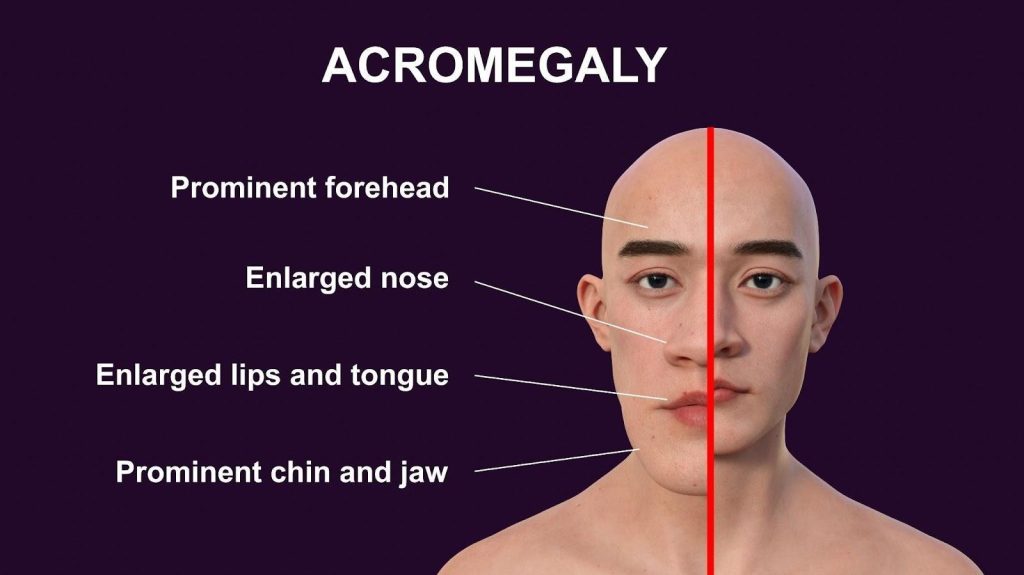
Acromegaly is a hormonal disorder that develops when the pituitary gland, located at the base of the brain, produces excessive amounts of growth hormone (GH). The excess hormone stimulates the liver to release insulin-like growth factor 1 (IGF-1), leading to abnormal tissue growth throughout the body. Because this process occurs gradually, changes often go unnoticed for years before the condition is diagnosed.
In adults, acromegaly causes bones to thicken rather than lengthen, resulting in enlarged hands, feet and facial features. It can also lead to joint pain, sleep apnoea, diabetes and high blood pressure. When excess growth hormone occurs in childhood, before the growth plates have fused, the condition is called gigantism, leading to excessive height and rapid overall growth. If you look at the world’s tallest individuals, most had gigantism.
Although acromegaly is rare, early recognition and treatment are vital to prevent long-term complications affecting the heart, metabolism and joints, and to improve quality of life.
Most cases of acromegaly are caused by a functional pituitary adenoma, a benign tumour that produces growth hormone. This benign tumour arises from cells that normally produce GH, leading to continuous hormone secretion and overstimulation of tissue growth.
Other much rarer causes of Acromegaly:
Regardless of the underlying cause, persistent excess growth hormone leads to progressive tissue enlargement and metabolic disturbances. Identifying the source of hormone overproduction is essential for effective treatment and long-term management.
The symptoms of acromegaly develop slowly over many years, making early recognition difficult as it is difficult to see the physical changes occur over time due to how gradually it occurs. They result from both the excessive growth hormone itself and the physical effects of a pituitary tumour pressing on nearby structures.
Early diagnosis is crucial to prevent irreversible complications affecting the heart, joints, and metabolism.
Acromegaly is a rare disorder that can occur in both men and women, typically between the ages of 30 and 50. While it can affect people of any age and is often sporadic, a small number of patients inherit genetic syndromes that increase the risk of pituitary or endocrine tumours, such as:
While the condition cannot always be prevented, early recognition of symptoms and regular monitoring in high-risk individuals allow for prompt diagnosis and effective treatment before complications develop.
Without treatment, prolonged exposure to excess growth hormone and insulin-like growth factor 1 (IGF-1) can cause serious, sometimes irreversible complications affecting multiple organ systems. These complications are the main reason early diagnosis and treatment are so important.
Some studies suggest that prolonged exposure to elevated IGF-1 may slightly increase the risk of colon and thyroid cancers.
If untreated, the cumulative effects of cardiovascular, metabolic and respiratory complications can shorten lifespan. With early and effective treatment, however, most patients achieve normal life expectancy and substantial symptom improvement.
Diagnosis of acromegaly requires careful clinical assessment supported by hormone testing and imaging studies. Because the condition develops slowly, early features may be subtle and several investigations are usually needed to confirm excess growth hormone production and identify its source.
Accurate diagnosis not only confirms the presence of acromegaly but also helps tailor treatment to control hormone levels, relieve pressure symptoms and prevent long-term complications.
The aim of treatment is to reduce growth hormone (GH) and insulin-like growth factor 1 (IGF-1) levels to normal, relieve pressure from the pituitary tumour and reverse or prevent complications. Treatment often combines surgery, medication and occasionally radiotherapy, depending on the tumour’s size, location and response to therapy.
When surgery is not possible or hormone levels remain elevated afterwards, medication is used to control GH production.
Regular follow-up with blood tests, MRI scans and evaluation for related conditions such as diabetes or heart disease ensures optimal control. Most patients require lifelong monitoring to maintain hormone balance and prevent recurrence.
With early diagnosis and appropriate treatment, acromegaly can be effectively managed, allowing patients to achieve normal hormone levels and an improved quality of life.
With early diagnosis and effective treatment, most people with acromegaly can achieve normal or near-normal hormone levels and live healthy, active lives. The long-term outlook depends on how quickly the condition is recognised, the size of the pituitary tumour and how well growth hormone levels are controlled after treatment.
Acromegaly is a rare but serious hormonal disorder caused by prolonged overproduction of growth hormone, usually due to a benign pituitary tumour. The condition develops gradually, often going unnoticed until physical changes or related health problems appear. If left untreated, it can lead to significant complications affecting the heart, metabolism, joints and overall quality of life.
Modern diagnostic methods, including hormone testing and MRI scanning, allow for accurate and early detection. With appropriate treatment, whether through surgery, medication or targeted radiotherapy, hormone levels can be brought under control, symptoms reduced and long-term health outcomes greatly improved.
If a doctor suspects you have acromegaly or you are experiencing symptoms or signs, such as an unexpected diagnosis of diabetes, changes in facial appearance, enlarged hands or feet, headaches or joint pains in the hands, schedule a consultation with The Metabolic Clinic for a proper evaluation, personalised treatment and ongoing hormonal care.
In most cases, acromegaly results from a pituitary adenoma that secretes excessive growth hormone.
Acromegaly is rare but remediable, affecting around 3 to 5 people per million each year. Because symptoms progress slowly, it is often diagnosed late.
Early signs include enlargement of the hands and feet, facial changes, joint pain and increased sweating. Subtle features such as tighter rings, shoe size increase or changes in appearance are often first noticed by others.
If untreated, acromegaly will shorten life expectancy due to cardiovascular, metabolic or respiratory complications. With effective treatment and good hormone control, most people live a normal lifespan.
Acromegaly affects men and women equally, but women may be diagnosed later as symptoms can overlap with hormonal changes such as menopause.
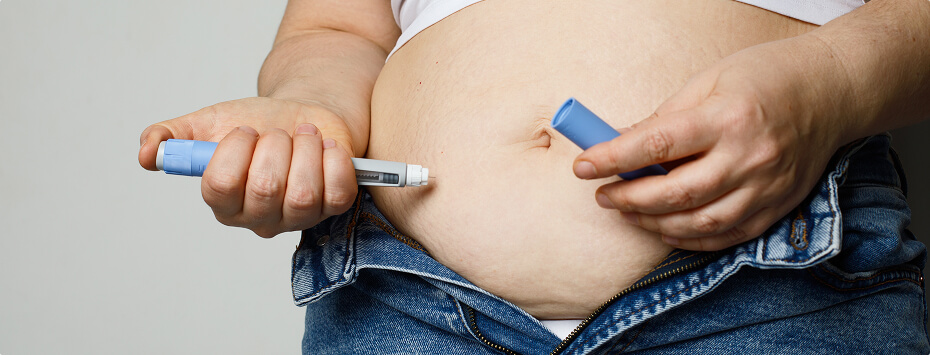
Yes. Excess growth hormone leads to insulin resistance, which increases the risk of developing type 2 diabetes and other metabolic disorders. Crucially, curing it will reverse this.
Diagnosis is made through blood tests measuring insulin-like growth factor 1 (IGF-1) and growth hormone levels, followed by an oral glucose tolerance test and MRI scan of the pituitary gland.
Most cases are not inherited. However, a small number occur as part of genetic syndromes such as multiple endocrine neoplasia type 1 (MEN1) or McCune–Albright syndrome.
Yes. Large pituitary tumours (macroadenomas) can press on nearby structures, leading to headaches or loss of peripheral vision.
Some patients achieve complete remission after surgery, particularly if the tumour is small. Others may need long-term medication to maintain normal hormone levels.
Some bone and facial changes may persist even after successful treatment, but soft tissue swelling, joint discomfort and other symptoms usually improve significantly once hormone levels are controlled.
When excess growth hormone develops before the growth plates close, it causes gigantism, leading to abnormal height and rapid growth together with the metabolic complications experienced in acromegaly.

MBBS (Hons), FRACP (Australia)
Dr. Dinesh lulus dengan predikat terpuji dari Monash University, Melbourne, pada 2009, dan menerima penghargaan Prince Henry's Prize in Surgery. Selama pelatihan endokrinologi di Melbourne, Dr. Dinesh memenangkan penghargaan registrar terbaik di Endocrine Society of Australia Clinical Weekend pada 2016, yang kemudian diikuti dengan keberhasilan beliau mendapatkan satu-satunya beasiswa fellowship Andrologi di Australia pada 2017. Sekembalinya ke Singapura, beliau menjabat sebagai pimpinan subspesialisasi untuk layanan adrenal, pituitari, dan tulang di Khoo Teck Puat Hospital serta mendirikan The Metabolic Clinic.
Sebagai pendidik yang berdedikasi, Dr. Dinesh menjabat sebagai Associate Programme Director untuk Endokrinologi di NHG, melatih calon-calon endokrinolog generasi berikutnya, dan menerima penghargaan NHG Teaching Award for Senior Doctors pada 2023. Sebagai seorang endokrinolog dengan kemahiran dalam bidang endokrinologi umum maupun subspesialisasi, beliau memiliki minat dalam bidang longevity (umur panjang) melalui peningkatan risiko kardiovaskular, metabolisme, kesehatan tulang, dan pencegahan penyusutan otot, yang bertujuan meningkatkan jumlah tahun hidup sehat seseorang.


Jika Anda merasa “tidak seperti biasanya” meskipun hasil tes normal, mengalami perubahan berat badan, kelelahan, atau gejala yang tidak dapat dijelaskan—saatnya untuk melihat lebih dalam.
Dapatkan kejelasan dan rencana yang disesuaikan dengan kondisi hormon dan kesehatan metabolik unik Anda.


Senin - Jumat
8:30 am to 5:30 pm
Sabtu
8:30 am – 12:30 pm
Minggu dan Libur Nasional: TUTUP

© 2026 The Metabolic Clinic. All Rights Reserved.